

Blog
Why Burglars Love August: Daylight Break-Ins, the Four Entry Points, and Where Your Cameras Should Point
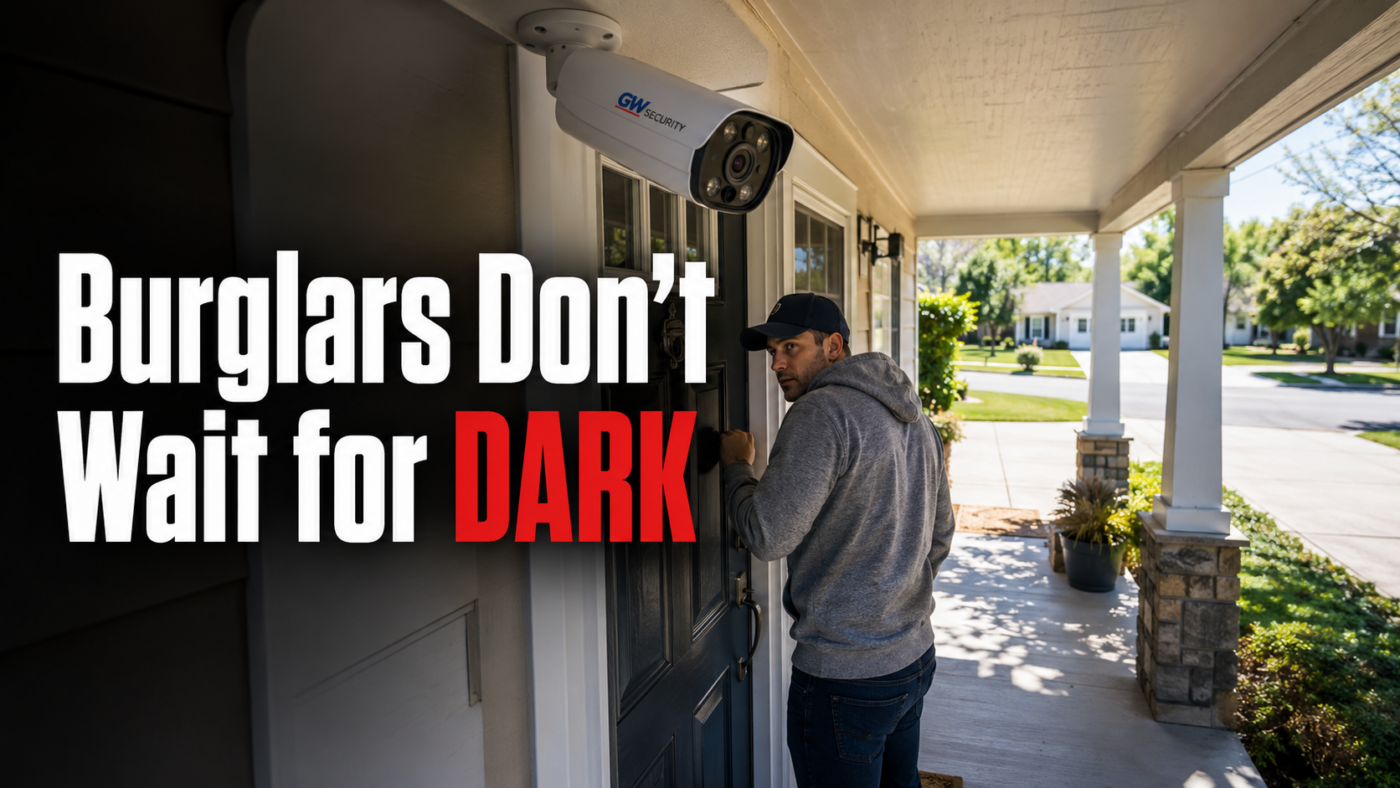
Aug
Picture a break-in. You’re probably imagining night: a flashlight beam, a figure in dark clothes, everyone asleep upstairs.
Now here’s what the data says: the most common residential burglary in America happens on a weekday, between roughly 10am and 3pm, through the front door, while nobody’s home. No flashlight. No lockpicks. Often no forced entry at all — a surprising share of burglars walk in through a door or window that was simply left unlocked.
And August is when it peaks. Justice Department victimization data has shown for decades that household burglary runs highest in the summer months — and late summer combines every advantage a burglar wants: vacations emptying houses, windows left open against the heat, long daylight hours to work in, and, starting this month, the back-to-school rhythm that empties entire neighborhoods on a schedule you could set a watch by.
If your camera setup was designed around the nighttime-prowler picture, this is the post where we fix that.
The 10am problem
Daytime burglary isn’t a fluke of the statistics — it’s the rational choice from the burglar’s side. At 11am on a Tuesday, the adults are at work, the kids are at school, and a stranger walking up a driveway is invisible in a way he could never be at 2am. He can knock on the front door first (if someone answers: “sorry, wrong address”), and if nobody does, he has the property to himself with a built-in excuse for being there.
That 8-to-12-minute window is why “the police will handle it” isn’t a plan on its own — average response times are longer than the entire crime. The realistic goals are the ones you control: convince him to pick a different house, and if he doesn’t, capture footage good enough to identify him. Everything below serves one of those two goals.
Where they actually get in
Ask people where burglars enter and they’ll guess a back window. The commonly cited breakdown from law enforcement and industry studies looks like this:
Front door
Knock first, then kick, pry, or just turn an unlocked knob.
First-floor window
Especially ones hidden from the street — and open ones in summer.
Back door
Out of sight of neighbors. Sliders are a favorite.
Garage
Open doors, unlocked side entries, and the door into the house behind them.
Read that grid as a camera placement checklist. Roughly 80% of break-ins use four predictable entry points — which means a modest four-camera system, aimed with intent, covers the overwhelming majority of the actual risk. The trick from our focal length guide applies directly: wide context cameras watching the approaches, plus at least one tight chokepoint camera that gets an identification-grade face shot at the front walk or driveway, because that’s the path a third of burglars literally walk up.
What burglars say actually deters them
When researchers at UNC Charlotte interviewed hundreds of convicted burglars about how they picked targets, the answers were remarkably consistent: most of them scoped a house first, and most said they’d move on to another target if they spotted a camera, an alarm, a dog, or signs someone was home. Burglars are not looking for a challenge. They’re looking for the easiest house on the block.
That reframes the job. Your security system’s first function isn’t catching anyone — it’s losing the audition. Here’s the deterrence stack, most impact first:
Make the cameras visible from the sidewalk.
A camera nobody sees deters nobody. The front-of-house cameras should be obvious to someone standing at the curb — that’s the moment the scoping decision gets made. Visible camera + yard sign is the cheapest “pick another house” signal there is. (Keep them at 8–9 feet, not the second story — visible and capable of a face shot.)
Turn on person alerts for the workday, not just the night.
If your motion notifications are tuned for after-dark, you’ve tuned them for the rare burglary and muted them for the common one. AI person detection (standard on modern GW cameras) means a human on your property at 11am pings your phone at work — and a two-minute glance at a live view is enough to call a neighbor or the police during that 8–12 minute window, not after it.
Answer the knock — from anywhere.
The front-door knock is the burglar’s occupancy test, and an unanswered knock is a green light. A doorbell camera or any camera with two-way audio lets you fail that test for him: “Can I help you?” through a speaker reads as someone’s home whether you’re upstairs or in a meeting across town.
Close the summer gaps: locks, windows, garage.
No camera fixes an open first-floor window facing the backyard. Before the workday: windows latched, slider bar in the track, garage door down, the door from the garage into the house locked. The unlocked-entry burglary is the most preventable crime in the dataset, and summer is when it spikes.
Keep the house looking occupied on school-year autopilot.
August starts the most predictable schedule of the year — and burglars know the neighborhood empties at 8am. Randomized lamp timers, a car in the driveway when possible, grass cut, packages not piling up. If you travel, the pre-trip camera check covers the rest.
- Fake cameras. Experienced burglars know the tells (no cable, dead IR ring, dummy housings sold by the thousand). Worse: if something does happen, you have zero footage and a lawsuit-bait prop.
- Hidden-only cameras. Great for evidence, zero deterrence. The scoping decision happens at the curb; a camera only you know about doesn’t vote.
- “Beware of Dog” without the dog. The knock test defeats it in ten seconds.
- Night-vision-first thinking. IR range doesn’t matter at 11am. Daytime image quality, person detection, and a clean face-height angle are the specs this threat actually uses.
The burglar’s-eye audit: 10 minutes this weekend
Walk your own property the way a scoper would. Start at the sidewalk and be honest:
- From the curb: can you see a camera? A sign? Or does the house read as unwatched?
- At the front door: if you knocked and no one answered, what would you try? Is there a camera that would have your face by now — not the top of your hat?
- Around the side: which first-floor windows are invisible from the street? Those are the ones that need coverage (or at minimum, locks you actually use). Tall fences and mature hedges that give you privacy give him privacy too.
- In back: could someone spend ten unhurried minutes at your back door without a single camera seeing them arrive, work, or leave?
- Check your own footage: pull up yesterday’s daytime clips. If the only events are cars and the mail carrier, good — now imagine a stranger in those frames and ask whether you’d have gotten a notification you’d actually read at work.
Most houses fail on two or three of those. The fix is rarely “buy eight cameras” — it’s aim the ones you have at the four entry points above, make at least one of them undeniable from the street, and turn on daytime person alerts.
Want a second opinion on your coverage?
Tell our U.S.-based team your entry points and we’ll tell you where cameras earn their keep — and where they don’t. Real phone calls, no wait tree.
Cover the four entry points that matter
Person-detection cameras, doorbell coverage, and an NVR that records locally — matched to your property in six questions. 60 seconds, no email required.
